Fall 2026 Symposium
The Unfinished American Revolution: Territories, Tribes, and the Meaning of Independence
Thursday – Friday, October 8 – 9, 2026
Thursday, October 8 | 1:00 – 6:30 p.m.
Friday, October 9 | 8:00 a.m. – 4:30 p.m.
In-Person and on Zoom
Fordham Law School
Costantino Room (Second Floor)
150 West 62nd Street
New York, NY 10023
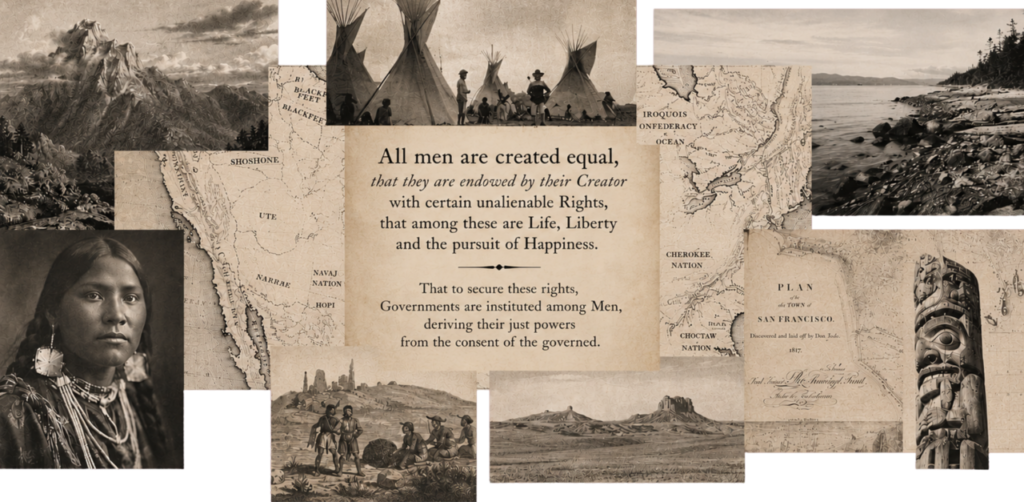
As the United States marks the 250th anniversary of the Declaration of Independence, this groundbreaking symposium reexamines the promises —and unfinished work—of the American Revolution. Bringing together leading scholars, judges, practitioners, and advocates, The Unfinished American Revolution explores how the principles of equality, selfgovernment, and consent of the governed have shaped—and often failed to shape—the constitutional relationship between the United States, Native nations, and U.S. territories.
Timed to coincide with the 125th anniversary of the Insular Cases and the 175th anniversary of the Indian Appropriations Act, the symposium will examine the enduring legacies of territorial governance, federal Indian law, and plenary power. Through interdisciplinary panels and forwardlooking discussions, participants will confront some of the most pressing constitutional questions of our time: Who belongs within the American constitutional community? What does self-determination mean in the twenty-first century? And what would it take to finally fulfill the promises of 1776 for all peoples under U.S. sovereignty?
Spring 2026 Symposium
Constitutional Law in the Age of Generative AI

Friday, February 27, 2026
8:30 AM – 9:00 AM | Check-In
9:00 AM – 3:30 PM | Program
In-Person and on Zoom
Fordham Law School
Costantino Room (Second Floor)
150 West 62nd Street
New York, NY 10023
This symposium will examine how generative artificial intelligence (GenAI) has and will continue to reshape the field of constitutional law. The rapid rise of GenAI, fueled by exponential growth in computing power and massive datasets, has already changed the legal landscape in areas such as criminal justice, employment, and privacy. Yet constitutional law has struggled to keep pace. As GenAI systems increasingly generate, analyze, and act on vast amounts of information, they raise pressing questions about free speech, equality, surveillance, and the proper scope of government regulation. Panels will explore topics such as how First Amendment doctrine should apply to AI systems, how to identify and mitigate bias embedded in algorithmic technologies, the constitutional implications of AI-driven surveillance, and the increasing risk to democracy and democratic accountability caused by AI-generated disinformation. The symposium will bring together leading scholars to assess how constitutional principles can adapt to this transformative era of artificial intelligence.
Fall 2025 Symposium
Antitrust Law and Oligarchy: The Intersection of Markets,
Democracy, and Power

Friday, October 10, 2025
8:30 – 9:00 a.m. | check-in
9:00 a.m. – 4:00 p.m. | program
In-Person and on Zoom
Fordham Law School
Costantino Room (Second Floor)
150 West 62nd Street
New York, NY 10023
This symposium will explore how the concentration of economic power directly shapes political society and democratic (or oligarchic) governance. As regulatory bodies, legal scholars, and policymakers grapple with how different kinds of structural reforms can address political oligarchy, this symposium will provide a critical forum for discussion. It will examine the relationship between the antimonopoly tradition and other arenas of democratic reform, consider how monopoly power in technology and health platforms affects speech, political power, and public accountability, and analyze how enforcement agencies, such as the DOJ and FTC, are confronting the challenges of oligarchic power in the modern era. This interdisciplinary symposium will bring together leading legal theorists, policymakers, and enforcers to assess evolving legal strategies for countering oligarchic structures.
Spring 2025 Symposium
Remedies for Looted Art and Cultural Property—Civil, Criminal or Consensual?

Friday, February 28, 2025
8:30 – 9:00 a.m. | Check-in
9:00 a.m. – 4:00 p.m. | Program
In-Person and on Zoom
Fordham Law School
Costantino Room (Second Floor)
150 West 62nd Street
New York, NY 10023
This is a moment in time when we as a society, in New York, nationally and internationally, are reexamining how we address looted art and cultural property. The Symposium will draw together discussion of Holocaust-era looted art and cultural property, antiquities taken in the Colonial-era and subsequently, as well as Native American cultural and religious artifacts, ancestors, and repatriation. There have been major developments recently in all these areas making this Symposium singularly appropriate at this point in time, and courts are increasingly being confronted with these issues. The Symposium will bring together diverse perspectives on issues of legislation, litigation, law enforcement, and societal examination of history, and will look at common themes of law and policy in these fields in order to examine where we are and to discuss potential future directions.
Fall 2024 Symposium
Reforming College Sports
Friday, November 1, 2024
Fordham Law School
Costantino Room (Second Floor)
150 West 62nd Street
New York, NY 10023
The U.S. college sports industry produces $19 billion in annual revenue. Some colleges bring in more than $100 million per year from their athletic programs, more than some National Hockey League teams. Nevertheless, the college athletes who provide the physical labor force for intercollegiate sporting events have historically rarely been paid. While some college coaches and athletic directors bring home salaries that far exceed seven figures, National Collegiate Athletic Association (NCAA) member schools continue to label college athletes as “amateurs” and “student-athletes” in hopes of avoiding legal obligations.
At present, the college sports industry is on the precipice of major change: not based on voluntary reform by NCAA member schools, but rather as a result of state legislative efforts, private antitrust lawsuits, and efforts to organize college athletes through unionization. These legal activities present a promise of creating a more equitable system of college sports in America, both in terms of the promotion of free labor markets and in terms of racial and gender equity. This symposium, featuring leading academics and practitioners in the field, will explore the reforms that lurk on the horizon in college sports, as well as the reasons why college athlete rights truly constitute human rights.